
Affiliate Disclosure: This post contains affiliate links. If you click and make a purchase, SoftAIHub.com may earn a small commission at no extra cost to you. We only recommend software we have tested. Read our full Affiliate Disclosure here.
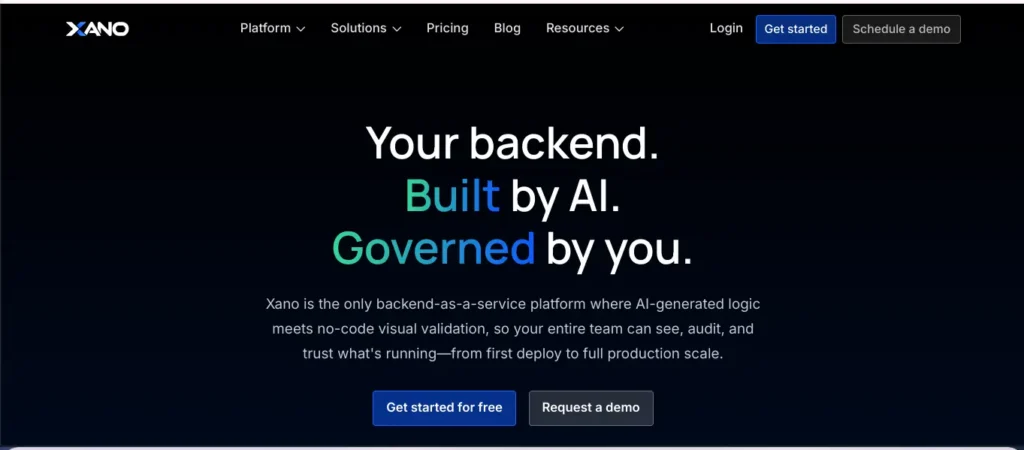
Building apps without touching code sounds amazing… until you hit the backend wall.
Most beginners and even experienced creators struggle with databases, APIs, and server management. That’s where no-code backend tools come in. But with so many options available today, how do you know which one actually works?
In this Xano Review 2026, we’ll break down whether this platform truly lives up to the hype. Is it powerful enough for real-world apps? Can beginners actually use it without frustration? And most importantly—is it worth your money?
With the rise of no-code development, tools like Xano promise to replace traditional backend development entirely. But promises don’t always match reality.
By the end of this review, you’ll know exactly whether Xano is the right backend solution for your projects—or if you should look elsewhere.
Quick Verdict
Best For: No-code developers, SaaS builders, startups
Starting Price: Free plan available
Free Trial: Yes
Ease of Use: Moderate (learning curve exists)
Top Benefit: Scalable backend without coding
Our Rating: 4.5/5
What is Xano Review 2026?
In this Xano Review 2026, we’re looking at a no-code backend platform that allows you to build APIs, manage databases, and scale applications—without writing code.
In simple terms, Xano replaces the “brain” of your app.
Instead of hiring backend developers or learning complex programming languages, you can visually build logic, connect databases, and deploy APIs.
Real Example
Imagine you’re building a blogging platform:
- You need user login
- You need a database for posts
- You need APIs to fetch content
Normally, this requires backend coding.
With Xano? You do it visually.
Why People Search for Xano
- They want to build apps without coding
- They need a scalable backend
- They’re tired of limited no-code tools
- They want full control over data and APIs
Who Needs It Most?
- Indie hackers building SaaS
- Bloggers creating tools or platforms
- Agencies delivering client apps
- Beginners entering no-code development
Xano positions itself as a serious backend—not just a beginner toy. Let’s see how it delivers.
Key Features in Xano Review 2026
1. No-Code API Builder
Xano allows you to create APIs without writing code.
Benefit: You can connect your frontend (like Webflow or Flutter) directly to your backend.
Use Case: Building a login system or fetching blog posts dynamically.
Best For: Beginners and non-technical founders.
SEO/Revenue Impact: Faster development means quicker product launches → faster monetization.
2. Scalable Database Management
Unlike basic no-code tools, Xano offers a powerful relational database.
Benefit: You can store complex data like users, posts, payments, etc.
Use Case: Running a membership website or SaaS app.
Best For: Growing startups.
SEO/Revenue Impact: Better data handling improves user experience → higher conversions.
3. Visual Backend Logic Builder
You can create workflows using drag-and-drop logic.
Benefit: No need to write backend code.
Use Case: Automating email notifications or payment workflows.
Best For: Non-developers.
SEO/Revenue Impact: Automation reduces manual work → more time for content and SEO.
4. High Performance & Scalability
Xano is built for serious applications—not just small projects.
Benefit: Your app won’t crash as traffic grows.
Use Case: Scaling from 100 users to 100,000 users.
Best For: SaaS founders.
SEO/Revenue Impact: Site speed and uptime directly affect rankings and revenue.
5. Built-in Security Features
Security is handled at the backend level.
Benefit: Protects user data automatically.
Use Case: Secure login systems.
Best For: Businesses handling sensitive data.
SEO/Revenue Impact: Trust signals improve conversions and brand authority.
6. External Integrations
Xano integrates with tools like Zapier, Make, and frontend builders.
Benefit: You can connect your entire workflow.
Use Case: Automating blog publishing or email campaigns.
Best For: Marketers and agencies.
SEO/Revenue Impact: Automation = consistent content = better rankings.
Pricing & Plans Breakdown in Xano Review 2026
Xano offers multiple pricing tiers.
Free Plan
- Limited API requests
- Basic features
- Good for testing
Paid Plans (Starter to Scale)
- More API requests
- Better performance
- Advanced features
Hidden Limits
- API request limits can hit quickly
- Scaling costs increase with usage
Value Comparison
- Cheaper than hiring backend developers
- Expensive compared to basic no-code tools
Who Should Choose What?
- Free Plan: Beginners testing ideas
- Starter Plan: Small projects
- Growth Plans: SaaS and serious apps
Pros and Cons of Xano Review 2026
Pros
- No coding required
- Highly scalable backend
- Powerful API builder
- Strong database capabilities
- Great for SaaS apps
Cons
- Learning curve for beginners
- Pricing increases with usage
- UI can feel complex initially
Xano Review 2026 vs Competitors
Xano vs Firebase
Writing Quality: Not applicable
SEO Optimization: Xano better for structured data
Workflow Speed: Firebase faster for developers
Pricing: Firebase can get expensive
Best Choice:
Choose Xano if you want no-code simplicity.
Choose Firebase if you’re a developer.
Xano vs Supabase
Ease of Use: Xano easier for beginners
Flexibility: Supabase more developer-friendly
Pricing: Similar scaling costs
Best Choice:
Xano wins for non-coders.
Supabase wins for developers.
Real Use Cases of Xano Review 2026
Bloggers
Build dynamic websites with user accounts and content management.
Affiliate Marketers
Create comparison tools or product databases.
Agencies
Deliver client apps without hiring backend teams.
Beginners
Start building apps without coding knowledge.
Niche Site Builders
Create custom tools that rank on Google.
Final Verdict
So, is Xano worth it?
In this Xano Review 2026, one thing is clear—this is not just another no-code tool. It’s a serious backend platform capable of powering real applications.
If you’re a beginner willing to learn, or a creator looking to build scalable apps without coding, Xano is a strong choice.
However, if you want something extremely simple with zero learning curve, this might feel overwhelming at first.
Who Should Use Xano?
- SaaS builders
- No-code developers
- Agencies
Who Should Avoid It?
- People looking for ultra-simple tools
- Users with no patience for learning
Final Thought
If your goal is to build real, scalable digital products—not just basic websites—Xano is absolutely worth considering.
And in 2026, it’s one of the most powerful no-code backend platforms available.
Wanna Master Your Backend with Xano?
Check out our expert guides to build scalable apps without code:
🏆 [The Comparison]: Xano vs Airtable vs Supabase: 2026 Winner
🚀 [The Integration]: Connect Xano with FlutterFlow: 2026 Guide
🏗️ [The Solution]: Build Scalable Apps with Xano Backend
🤖 [The AI Powerhouse]: Master AI App Development with Xano Backend: 2026 Tutorial
More from SoftAIHub:
🚀 Development: Best No-Code Development Tools for 2026
🎨 Creativity: Top 10 AI Tools for Content Creation
🎓 Productivity: Best AI Tools for Students in 2026
🛠️ Optimization: CCleaner Download Guide 2026: The Secret Weapon for Speed